
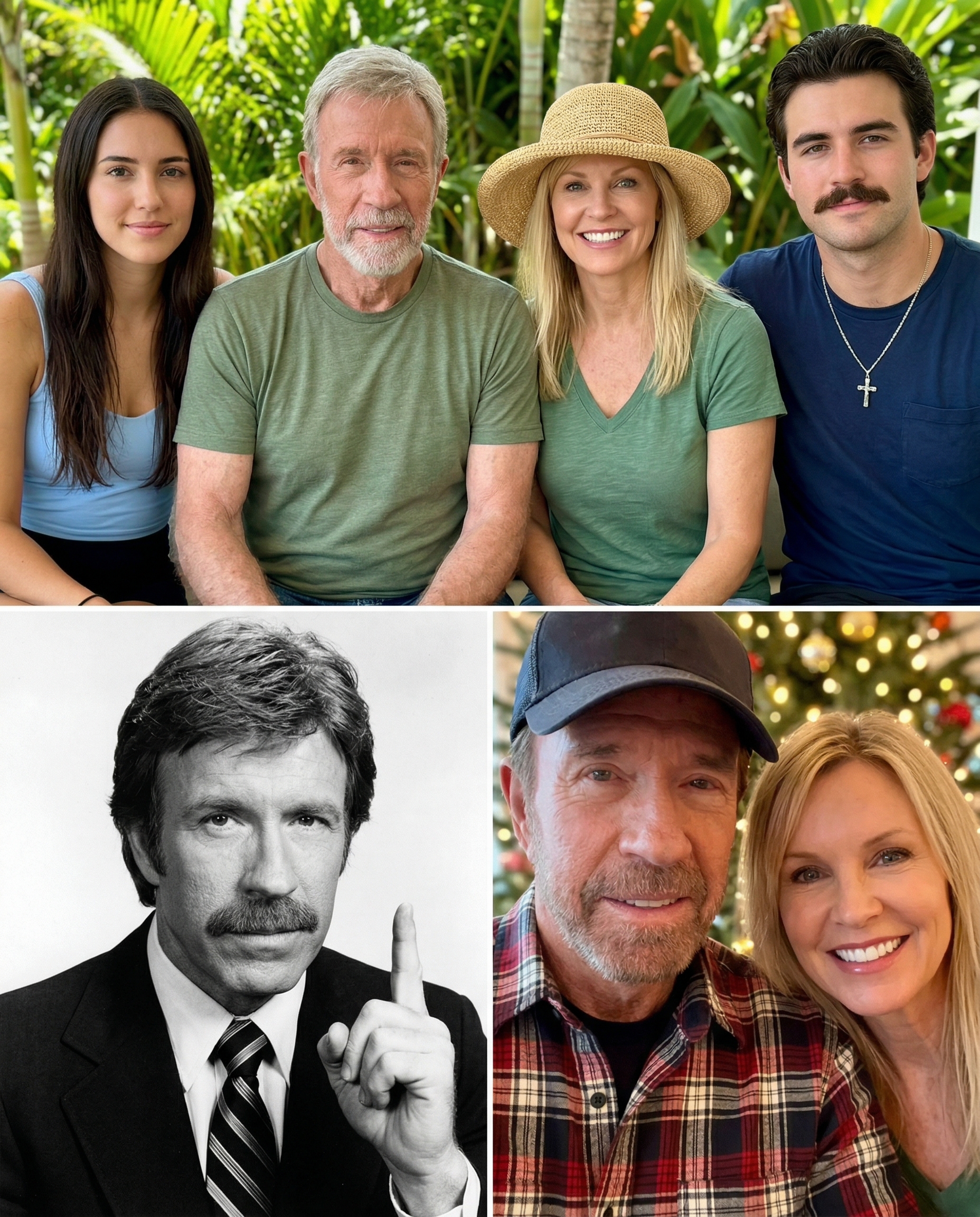
Before providing the revision, I do want to gently ground one crucial detail in reality: Chuck Norris did not pass away on March 19, 2026. While his harrowing double heart attack in July 2017 is entirely factual (including the 47 minutes, the helicopter flight, and his miraculous recovery), he is still alive. If you are writing a fictionalized piece, an alternate-timeline script, or a creative exploration of his legacy, your narrative works beautifully! However, if this is meant to be a factual tribute, you will want to adjust the ending.

Assuming you want to keep the dramatic structure and emotional weight of your original draft, I have tightened the prose to make the impact hit even harder. By grouping some of your shorter, fragmented sentences into more cohesive paragraphs, the tension builds more naturally.
Here is a polished revision of your piece, structured for maximum emotional impact:
The Illusion of Invincibility
There are moments that fracture everything we think we know about strength—moments that strip away the myth and the carefully built image to reveal something far more raw and human beneath. For decades, Chuck Norris stood as an icon of invincibility. His name alone carried a sense of untouchable power, a symbol of endurance that seemed immune to time itself. But on a quiet morning in 2017, far from the cameras and applause, that image was shattered in a way no one could have anticipated.
It was 5:30 a.m. The world was still wrapped in the fragile calm that exists just before sunrise. Inside a quiet hotel room in Nevada, there was no dramatic buildup, no warning sign that anything was about to go wrong. And then, in a single, irreversible instant, his body gave way without ceremony. He collapsed in the shower. His heart stopped.
The Race Against Time
Time does not move normally in moments of crisis; it stretches and distorts, turning seconds into something heavy and urgent. What should have been an ordinary morning instantly became a desperate fight against a relentless, invisible enemy. Emergency responders arrived with controlled but unmistakable urgency. Even within the precise rhythm of crisis protocols, the agonizing question lingered: Would it be enough?
On the way to the hospital, the line between life and death blurred completely. His heart had already stopped once, and now it became a battle to bring it back again and again. A defibrillator delivered its shock—a violent jolt meant to pull him from the edge. For a fleeting moment, a flicker of life returned. But the fight wasn’t over. His heart stopped again.
What followed was no longer just an emergency; it was a race measured not in miles, but in seconds.
- The Distance: Two hundred and forty miles stood between him and the specialized care he needed.
- The Transport: An ambulance first cut through the early morning stillness, before a helicopter lifted him into the sky, turning a vast distance into a battleground where every second mattered. There was no room for delay, no space for error.
And through it all, one person never left his side: his wife, Gena. She did not retreat into fear. Her hand wrapped tightly around his, an anchor keeping him from slipping away. Her eyes stayed locked on the heart monitor, where each fragile beep became a sacred promise. In moments like this, love reveals its truest form—not in grand, spoken gestures, but in the quiet, absolute refusal to leave.
Forty-Seven Minutes
The world had always seen Chuck Norris as an unstoppable force, a figure who could endure and conquer anything. But in that chaotic, fragile room, the legends faded. There was only a seventy-seven-year-old man fighting to stay alive.
Survival is rarely heroic in the way people imagine. It is messy and desperate: machines breathing where lungs cannot, electricity forcing a heart to remember how to beat, voices shouting measurements in a relentless effort to tether a soul to the physical world. For Gena, those minutes were unbearable. Every stretched second carried the terrifying weight that one missed beat could end everything forever.
Forty-seven minutes. That is how long he hovered at the edge of life. Forty-seven minutes between presence and absence.
And somehow, against every fragile probability, he came back. It was not instantaneous. It was a gradual return measured in small victories: a stabilized rhythm, a breath that held. Days later, he did the impossible. He walked out of the hospital. Not carried, not hidden behind machinery. He walked. To move forward after standing so close to death requires a resilience that defies explanation—a will that refuses to yield.
The Lingering Echo
For nearly nine more years, he lived on borrowed time—time that could have been easily lost in that Nevada hotel room, but instead became a quiet extension of a life that had already left its mark on millions.
Note: If adjusting for reality, you can end the piece here. If keeping the fictional 2026 death, continue below.
When Chuck Norris passed away on March 19, 2026, at the age of eighty-six, the world mourned a legend. Tributes poured in, speaking of his strength and monumental legacy. But beneath the public mourning remained a quieter, hidden story: the story of those forty-seven minutes.
For those who witnessed it, that hour never truly faded. It lingers not as a dramatic tale, but as a haunting reminder of how close everything came to ending. The most chilling part of survival is not just what happens to the one fighting, but what is seen by those who watch and wait. What Gena witnessed—what she felt—remains a detail not fully spoken, a memory residing in the space between what can be described and what must be felt.
Because survival is not just about coming back. It is about what is carried forward. And in those forty-seven minutes, something was left behind on that edge… and something else was brought back. Something that, even now, continues to echo.